women’s trousers size guide uk
Navigating women’s trouser sizing in the UK can be tricky! Understanding variations, accurate measurements, and fit styles are key to finding your perfect pair.
This guide simplifies the process, offering conversion charts and brand-specific advice for a confident shopping experience, ensuring a flattering fit every time.
Understanding UK Size Variations
UK trouser sizing isn’t always consistent, differing significantly between brands and even styles within the same brand. A size 12 in one store might not equate to a size 12 elsewhere, creating confusion for shoppers. This inconsistency stems from varying cut designs, fabric compositions, and target demographics.
Historically, UK sizing evolved independently, leading to a unique system compared to US or European standards. Furthermore, the rise of fast fashion and global manufacturing has introduced even more discrepancies. It’s crucial to remember that numeric sizes (6, 8, 10, etc.) often correlate to waist measurements, but this isn’t a universal rule.
Therefore, relying solely on your usual size is risky. Always consult the specific brand’s size guide and, ideally, take your own measurements (waist, hips, and inseam) before making a purchase; Understanding these variations empowers you to make informed decisions and avoid the frustration of ill-fitting trousers.
Taking Accurate Measurements
Precise measurements are essential for finding well-fitting trousers! Accurately measure your waist, hips, and inseam to determine your ideal size and ensure comfort.
Waist Measurement Guide
To measure your waist accurately, stand naturally and relax your abdomen. Use a flexible measuring tape, ensuring it’s snug but not tight. Locate your natural waistline – typically the narrowest part of your torso, usually above your belly button.
Wrap the tape measure around your waist, keeping it parallel to the floor. Avoid pulling the tape too tightly, as this will result in an inaccurate measurement. Exhale normally while taking the measurement. Record the measurement in inches or centimeters.
For the most accurate results, it’s helpful to have someone else take the measurement for you. Refer to the size charts provided by retailers, as waist measurements can vary between brands. A typical waist measurement for a UK size 6 is around 26 inches, increasing by approximately 2 inches per size.
Remember that trouser rise (high, mid, or low) can also influence where you measure your waist.
Hip Measurement Guide
Accurately measuring your hips is crucial for finding well-fitting trousers. Stand with your feet together and your weight evenly distributed. Ensure you’re wearing minimal clothing or the type of underwear you’d typically wear with trousers.
Wrap a flexible measuring tape around the fullest part of your hips and buttocks. Keep the tape measure level all the way around your body, parallel to the floor. Avoid pulling the tape too tightly; it should be snug but comfortable.
Record your hip measurement in inches or centimeters. A typical hip measurement for a UK size 6 is around 36 inches, increasing by approximately 2-3 inches per size. Remember that hip measurements are particularly important for styles like wide-leg or bootcut trousers.
Compare your hip measurement to the brand’s size chart for the most accurate size selection.
Inseam Measurement Guide
Determining your inseam is vital, especially when purchasing trousers online or from brands you’re unfamiliar with. The inseam is measured from the crotch seam to the bottom hem of the trouser. The most accurate way to measure is to use a pair of well-fitting trousers you already own.
Lay the trousers flat and measure along the inner leg seam, from the crotch to the hem. Alternatively, stand straight with shoes on and have someone measure from your crotch to the floor. Subtract your shoe height for a precise inseam length.
Typical inseam lengths vary depending on height and style preference. A standard inseam for a UK size 12 is around 32 inches, but this can differ. Consider the style – longer for heels, shorter for flats.
Always check the brand’s size guide, as inseam lengths can vary significantly.
UK Trouser Size Chart – Conversion Tables
Accurate conversion charts are essential for finding the right fit. These tables translate numeric sizes to waist measurements and offer international size equivalents, from XS to 4XL.
Numeric Size to Waist Measurement
Understanding the correlation between UK trouser sizes and actual waist measurements is crucial for a perfect fit. Unlike dress sizes, trouser sizes are more directly linked to your waist circumference. This table provides a general guideline, but remember that variations exist between brands – always check the specific brand’s size chart.
Here’s a typical conversion:
- Size 6: 26-27 inches
- Size 8: 28-29 inches
- Size 10: 30-31 inches
- Size 12: 32-33 inches
- Size 14: 34-35 inches
- Size 16: 36-37 inches
Important Note: These are approximate measurements. If you fall between sizes, it’s generally recommended to size up, especially for fitted styles. Always prioritize comfort and ensure you can comfortably button and zip the trousers without feeling restricted. Accurate measurement is key to avoiding returns and finding trousers you’ll love to wear!
International Size Conversions (XS-4XL)
Shopping for trousers online from international retailers requires understanding size conversions. UK sizes differ from US, European (EU), and other international standards. This chart provides a general guide, but brand-specific variations are common, so always consult the retailer’s size chart before purchasing.
Here’s a typical conversion overview:
- XS (UK 8): US 4-6, EU 36-38
- S (UK 10): US 6-8, EU 38-40
- M (UK 12): US 8-10, EU 40-42
- L (UK 14): US 10-12, EU 42-44
- XL (UK 16): US 12-14, EU 44-46
- XXL (UK 18): US 14-16, EU 46-48
- XXXL (UK 20): US 16-18, EU 48-50
- 4XL (UK 22+): US 18+, EU 50+
Remember: These are approximate. Waist and hip measurements are more reliable than relying solely on letter sizes. Prioritize checking the specific brand’s detailed size guide for the most accurate fit.
Trouser Fit Styles and Their Impact on Size
Trouser fit dramatically affects sizing! Skinny, straight, wide-leg, and bootcut styles require different considerations for a flattering and comfortable fit.
Skinny Fit Trousers – Sizing Considerations
Skinny fit trousers, designed to closely follow the leg’s shape, often require careful sizing. Due to their close cut, these trousers typically offer less flexibility than looser styles. It’s generally recommended to size up if you’re between sizes, particularly if the fabric has minimal stretch.
Consider the material composition; a higher percentage of elastane or spandex will provide more give and allow for a closer fit. When measuring, pay close attention to your hip circumference, as this is a critical area for skinny trousers. A snug, but not overly tight, fit is ideal. Avoid trousers that create visible bunching or feel restrictive.
Remember that skinny trousers can accentuate any imperfections, so a smooth, well-fitting pair is essential for confidence and comfort. Prioritize a waistband that doesn’t dig in and allows for comfortable movement.
Straight Leg Trousers – Sizing Considerations
Straight leg trousers offer a classic, versatile silhouette, providing more sizing flexibility than skinnier cuts. Generally, you can opt for your usual size, but consider the fabric and desired fit. If you prefer a more relaxed look, sizing up slightly can create a comfortable, flowing drape.
Pay attention to the waist measurement, ensuring it sits comfortably without being too tight or loose. The hip area should also allow for ease of movement. Unlike skinny fits, straight leg trousers don’t cling, so a precise hip measurement isn’t as crucial.
Check the length, as straight leg trousers often look best with a slight break at the shoe. A well-fitting pair should skim the leg without feeling constricting, offering both style and comfort.
Wide Leg Trousers – Sizing Considerations
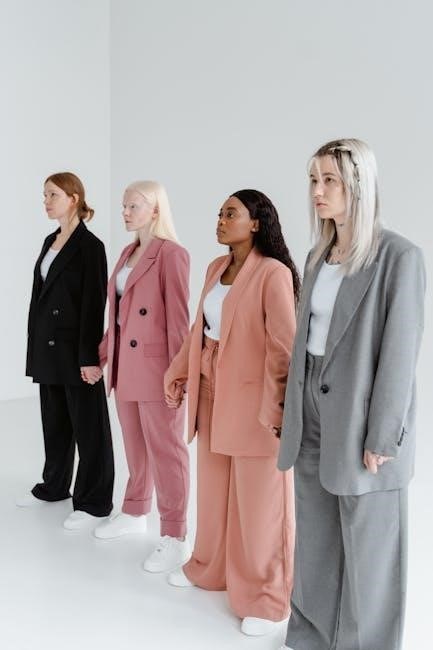
Wide leg trousers demand careful sizing due to their voluminous silhouette. Often, sizing down from your usual trouser size is recommended, particularly if the fabric isn’t structured. This prevents the trousers from appearing overly baggy and losing their shape. Prioritize waist fit; a secure waist is crucial for balancing the wider leg opening.
Hip measurements are still important, but less critical than with slimmer styles. Focus on ensuring the trousers fall gracefully from the hips without pulling or gaping. Length is paramount – wide legs typically require heels or platforms to avoid dragging.
Consider the rise; high-waisted wide legs accentuate the waist, while mid-rise options offer a more relaxed feel. Always check the brand’s specific size guide, as cuts vary significantly.
Bootcut Trousers – Sizing Considerations
Bootcut trousers require a balance between a comfortable waist and a flattering flare. Unlike skinny fits, these trousers are designed to accommodate footwear, so avoid sizing down drastically. A snug, but not tight, fit at the waist is essential, as the flare begins below the hip. Pay close attention to the rise, as it impacts how the trousers sit on your body.
Hip measurements are important to ensure a smooth line through the thighs. The flare should start gradually, creating a balanced silhouette. Length is crucial; bootcut trousers are intended to be worn with heels or boots, so factor that into your inseam measurement.
Check brand-specific guides, as flare widths vary. A well-fitted bootcut trouser will skim the hips and thighs before gently flaring from the knee.
Brand-Specific Size Differences
Size consistency varies significantly between brands! PRIMABELLA and ASOS, for example, have unique sizing charts; always consult their specific guides for the best fit.
PRIMABELLA Size Guide
PRIMABELLA offers a detailed size guide to help customers find their ideal fit. Their sizing appears to cater to a range of body types, with measurements provided in both inches and centimeters, facilitating easier conversions for international shoppers.
The PRIMABELLA chart typically correlates UK sizes 6 through 16 with specific waist measurements. For instance, a UK size 6 generally corresponds to a waist measurement of 70-74 cm (approximately 27.5-29 inches), while a size 16 aligns with 88-92 cm (around 34.6-36.2 inches).
It’s crucial to note that these are general guidelines, and variations can occur based on the trouser style and fabric. PRIMABELLA’s size guide also includes sizes ranging from XXS to XL, offering a broader selection for diverse body shapes. Always prioritize checking the specific product’s measurements before making a purchase to ensure a comfortable and flattering fit.
ASOS Women’s Trouser Size Chart
ASOS provides a comprehensive women’s trouser size chart designed to assist shoppers in selecting the correct fit. They emphasize the importance of accurate measurements, offering a detailed guide on how to measure your waist and hips effectively.
ASOS’s chart typically covers a wide range of sizes, from XS to 4XL, and includes corresponding measurements in both inches and centimeters. They also offer guidance on converting between international sizes, making it easier for customers from different regions to shop confidently.
The ASOS guide highlights that sizing can vary slightly between brands available on their platform, so it’s always recommended to check the specific size guide for each brand. ASOS encourages customers to review product details and customer reviews for additional insights into fit and sizing before finalizing their purchase.
Understanding Trouser Rise
Trouser rise – high, mid, or low – significantly impacts fit and comfort. Knowing your body shape and preferred style is crucial for selecting the most flattering rise.
High-Waisted Trousers – Size and Fit
High-waisted trousers typically sit at or above the natural waist, creating a longer leg line and defining the waist. When sizing for this style, accurate waist measurement is paramount, as the waistband will sit higher than traditional trousers.
Consider that high-waisted styles can accentuate the stomach area, so a comfortable fit is essential – avoid anything too tight. If you’re between sizes, it’s often best to size up, especially with non-stretch fabrics. Pay attention to the rise length; some high-waisted trousers are exceptionally high, potentially impacting comfort if you have a shorter torso.
With wide-leg or bootcut high-waisted trousers, ensure the length is appropriate for your heel height. A longer length can balance the higher waist, while a cropped length offers a more modern look. Remember to check brand-specific size guides, as high-waisted fits can vary considerably.
Mid-Rise Trousers – Size and Fit
Mid-rise trousers generally sit between the hips and the natural waist, offering a versatile and comfortable fit for many body types. When determining your size, both waist and hip measurements are crucial, as the waistband will fall across both areas.
Unlike high-waisted styles, mid-rise trousers offer more flexibility in fit. However, avoid trousers that are too loose in the waist, as they may gape or slip down. If you have wider hips, ensure the trousers have enough room through the hips and thighs without being overly tight.
Consider the fabric composition; stretch fabrics will offer more give, while non-stretch fabrics require a more precise fit. Always consult the brand’s size chart, as mid-rise definitions can vary. A well-fitting pair will enhance your silhouette without compromising comfort;
Low-Rise Trousers – Size and Fit
Low-rise trousers sit significantly below the natural waist, typically on the hips. Accurate hip measurement is paramount when selecting the correct size, as the waistband will rest primarily on this area. Waist measurement remains important, but less critical than with higher-waisted styles.
These trousers often require a more precise fit to avoid gaping at the back or digging in at the hips. If you have a shorter torso, low-rise styles may create a more balanced proportion. Conversely, those with longer torsos might find them less flattering.
Pay close attention to the fabric; stretch fabrics are often preferred for low-rise trousers to accommodate movement and ensure a comfortable fit. Always check the brand’s specific size guide, as low-rise fits can vary considerably.
Trouser Material and Stretch
Fabric significantly impacts trouser fit! Stretch fabrics offer more flexibility, potentially allowing for a closer fit, while non-stretch materials require more precise sizing.
Stretch Fabric Trousers – Sizing Advice
When choosing stretch fabric trousers, consider the fabric’s composition and stretch percentage. Generally, you might find you can size down, particularly with high-stretch content, as the fabric will conform to your body shape. However, avoid sizing down excessively, as you still need comfortable movement.
It’s crucial to assess how much the fabric gives when you try them on. A good test is to sit down and ensure the trousers don’t feel overly restrictive or dig in anywhere. Remember that stretch fabrics can lose some elasticity over time with repeated wear and washing, so a snug but comfortable fit initially is ideal.
Pay attention to the overall silhouette; even with stretch, different cuts (skinny, straight, wide leg) will require slightly different considerations. Always check the brand’s specific size guide, as stretch percentages and fits vary considerably. Prioritize comfort and a flattering shape over strictly adhering to your usual size.
Non-Stretch Fabric Trousers – Sizing Advice
With non-stretch trousers, accurate measurements are paramount. Unlike stretch fabrics, these offer little to no give, meaning a poor fit will be significantly more noticeable and uncomfortable. It’s generally advisable to choose a size that closely matches your largest measurement – typically your hips – to ensure a comfortable fit around the fullest part of your body.
Allow for a little ease in the waist, but avoid excessive looseness, as this can affect the overall silhouette. Consider the cut of the trousers; wider leg styles often require a more precise fit in the waist and hips. Always check the brand’s size guide, as non-stretch fabrics vary in their structure and drape.
When trying on, move around and sit down to ensure freedom of movement. If you’re between sizes, it’s often better to size up and have the trousers tailored for a perfect fit.
Measuring Pleated Trousers
Pleated trousers require careful measurement! Focus on waist and hip size, as pleats add volume. Refer to specific size charts for accurate fitting, sizes 6-16.
Pleated Pant Size Chart (UK Sizes 6-16)
Understanding the nuances of pleated trouser sizing is crucial for a flattering fit. This chart provides a guideline, but remember variations exist between brands. Always check the specific brand’s size guide alongside this one for optimal results.
| UK Size | Waist (cm) |
|---|---|
| 6 | 34;7 (approx. 26 inches) |
| 8 | 36.8 (approx. 28 inches) |
| 10 | 38.9 (approx. 30 inches) |
| 12 | 41.0 (approx. 32 inches) |
| 14 | 43.2 (approx. 34 inches) |
| 16 | 45.3 (approx. 36 inches) |
Resources for Further Assistance
Finding the perfect fit doesn’t always end with a chart! Several online resources offer personalized assistance and detailed sizing information. ASOS provides a comprehensive women’s trouser size chart, guiding you through accurate measurements and international conversions. Their visual guides are particularly helpful.
For broader sizing information encompassing various brands, explore online communities and forums dedicated to fashion and fit. Many retailers, like PRIMABELLA, offer specific size guides on their websites, detailing measurements for their unique styles. Don’t hesitate to utilize these brand-specific resources.
Furthermore, consider virtual fitting tools or in-store assistance from trained stylists. These professionals can offer tailored advice based on your body shape and preferred fit, ensuring a confident and comfortable trouser purchase.